Korean Names in K-pop: Hangul and Romanization
Why can the same Korean name have several different spellings? A guide to reading Hangul, romanized names and stage names.
Photo : Wikimedia Commons
Article automatically translated from French.
Fans often come across several versions of the same idol’s name: a name in Hangul, a Latin-letter spelling used by the agency, sometimes a stage name, and a different spelling in an older article. These variations do not necessarily mean there is a mistake.
They stem from different writing systems, artistic choices and international conventions. Recognizing them makes it easier to look someone up without mistaking them for another artist with the same name.
01Hangul represents Korean sounds
Hangul is the alphabet used to write Korean. Its letters are grouped into syllable blocks: each visual block generally corresponds to a syllable, rather than a single character representing an entire word.
The Latin-letter version makes a name readable without knowing Hangul. It does not capture the original pronunciation exactly, because French and English do not always assign the same sounds to the same letters.
02Revised Romanization
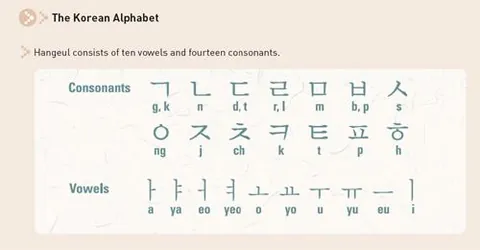
The National Institute of Korean Language publishes the principles of Revised Romanization. The system is based on standard pronunciation and uses only Latin letters wherever possible. For example, it renders ㅓ as “eo,” ㅡ as “eu” and ㅈ as “j.”
These conventions explain spellings that may seem surprising to a French-speaking reader. “eo” is not meant to be pronounced as two separate French vowels; it is a convention for representing a Korean vowel.
A consonant’s position matters too. The sounds written as ㄱ, ㄷ or ㅂ may be represented by different Latin letters depending on whether they appear before a vowel or at the end of a syllable. Two similar spellings can therefore reflect different transcription conventions rather than a name change.
03Proper names often keep a chosen spelling
Official romanization rules do not override established spellings used by people, groups or brands. An agency may adopt an international spelling and keep it across albums, credits and official accounts.
That is why the stage name an artist uses publicly should remain the editorial reference, even if a mechanical conversion from Hangul would produce a different spelling. On Ensemble, idol profiles use the public name associated with the artist’s group, along with an identifier that includes the group to reduce clashes between identical names.
04Family names and given names
In Korean, the family name usually comes before the given name. Kim Nam-joon therefore places Kim, the family name, before Nam-joon. In an international context, that order may be kept or adapted; it is important to check the official presentation rather than assume the order follows French naming conventions.
Hyphens in romanized given names are not always used consistently. Capitalization can vary too. These typographical choices alone do not establish that the names refer to different people.
05Legal names, stage names and aliases
A stage name may have no direct connection to an artist’s legal name, as with RM, or it may retain part of it. An artist may also officially change the name they use during their career. The best approach is to use the current name in the title and mention an earlier version only when it adds useful context.
For groups, the Hangul name may be a phonetic transcription, a translation or a distinct Korean name. Group profiles display the Korean form when it has been verified, without inventing a French translation.
06Searching without mixing people up
Several artists may share a short given name. Adding the group or agency to a search reduces ambiguity: “Jisoo BLACKPINK” is more precise than “Jisoo” alone. Ensemble applies the same logic to its internal linking, creating a link only when the full name matches.
For learning beyond proper names, the Online King Sejong Institute offers Korean courses from introductory to advanced levels, as well as cultural resources. These official courses provide a stronger foundation than simply memorizing song lyrics.
K-pop newsletter
K-pop news straight to your inbox
One email a week: upcoming comebacks, new blog posts and the latest quizzes. No spam, unsubscribe in one click.
Your address is only used for the blog newsletter.
Even more K-popAI chat: 50 questions a day, private rooms and quizzes.Discover Premium →